OpenHarmony is a new mobile operating system that offers a popular alternative to Android and iOS. To support its adoption, significant efforts have been devoted to porting C/C++ libraries from Linux to OpenHarmony. However, this porting process presents unique challenges due to the funda- mental architectural differences in system libraries, runtime environments, and build systems between the two platforms. These discrepancies manifest as Cross-platform Incompatibility (CPI) issues during cross-compilation, which are particularly difficult to resolve for two key reasons. First, conventional cross-compilation toolchains provide only brief error messages that offer inadequate diagnostic information for CPI issues. Second, resolving these issues requires a deep understanding of cross-platform discrepancies, yet comprehensive documentation or systematic guidelines about such Linux-to-OpenHarmony differences remain largely unavailable.
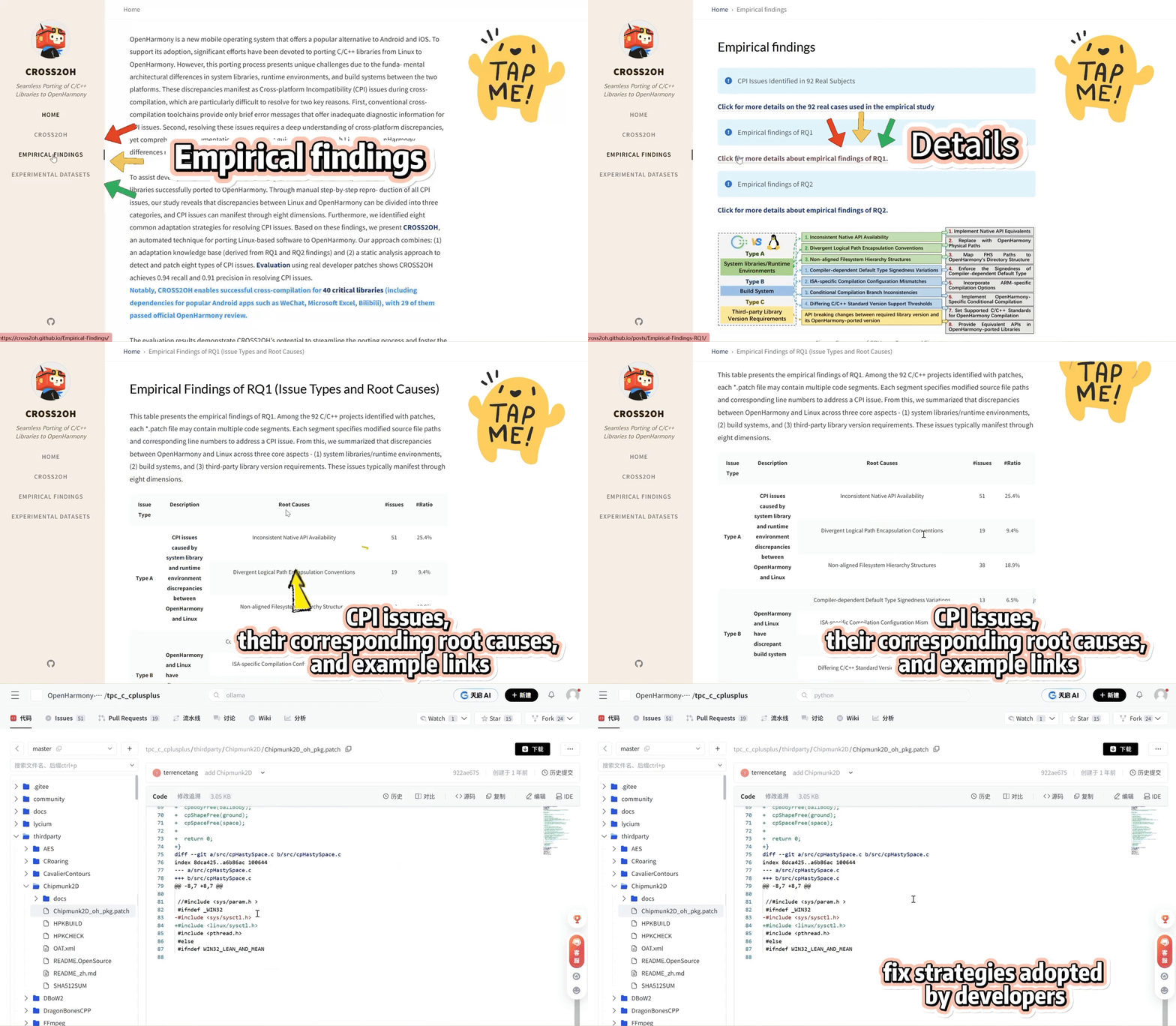
To assist developers in addressing these challenges, we con- ducted an empirical study on 92 C/C++ libraries successfully ported to OpenHarmony. Through manual step-by-step repro- duction of all CPI issues, our study reveals that discrepancies between Linux and OpenHarmony can be divided into three categories, and CPI issues can manifest through eight dimensions. Furthermore, we identified eight common adaptation strategies for resolving CPI issues. Based on these findings, we present CROSS2OH, an automated technique for porting Linux-based software to OpenHarmony. Our approach combines: (1) an adaptation knowledge base (derived from RQ1 and RQ2 findings) and (2) a static analysis approach to detect and patch eight types of CPI issues. Evaluation using real developer patches shows CROSS2OH achieves 0.94 recall and 0.91 precision in resolving CPI issues.
Notably, CROSS2OH enables successful cross-compilation for 40 critical libraries (including dependencies for popular Android apps such as WeChat, Microsoft Excel, Bilibili), with 29 of them passed official OpenHarmony review.
The evaluation results demonstrate CROSS2OH’s potential to streamline the porting process and foster the growth of the OpenHarmony software ecosystem.